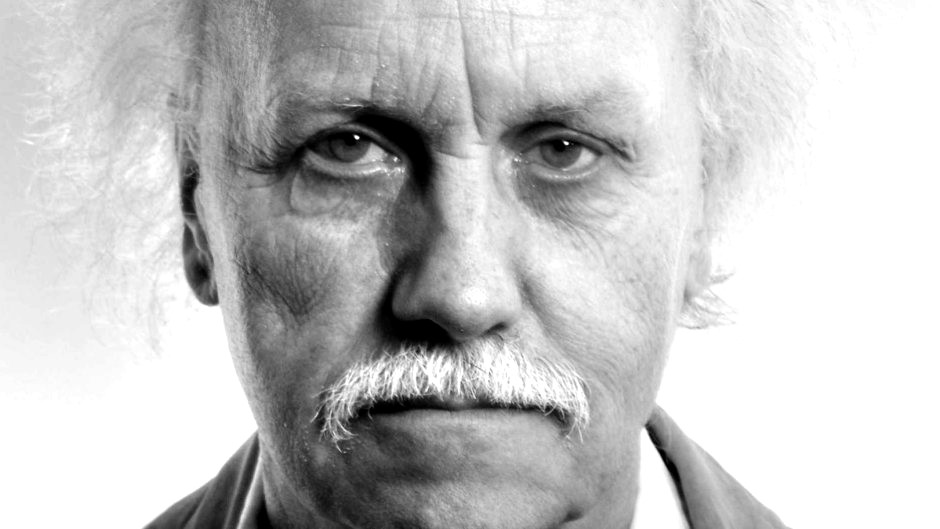
Postcolonial Critique – A Mosaic of Voices and Places
Postcolonial Critique – A Mosaic of Voices and Places

Contents
- Introduction
- Ch. 1: The Legacy of Colonialism
- Ch. 2: Representation and Stereotype
- Ch. 3: Discourse and Power
- Ch. 4: The Silent Subaltern
- Ch. 5: Mimicry, Hybridity, and Resistance
- Ch. 6: Epistemic Violence and Symbolic Power
- Ch. 7: Local Meaning-Making and Social Identity
- Ch. 8: Creolization and Cultural Adaptation
- Ch. 9: The Greenlandic National Costume
- Ch. 10: La Sape and Fashion’s Resistance
- Ch. 11: Decolonization as a Personal Process
- Ch. 12: Art, Body, and Cultural Reclamation
- Ch. 13: Ecology and Colonial Exploitation
- Ch. 14: Climate and Indigenous Perspectives
- Ch. 15: Indigenous Peoples as Symbols and Mirrors
- Ch. 16: Postcolonial Subjectivity and Global Youth
- Ch. 17: Postcolonial Elites
- Ch. 18: Cooperation and Organizations
- Ch. 19: Education with Roots
- Ch. 20: Environment, Spirituality, and Territory
- Ch. 21: Nomadism and Anthropological Blind Spots
- Ch. 22: Anthropology – Between Science and Responsibility
- Ch. 23: Postcolonial Institutions
- Ch. 24: Body, Ethics, and the Production of Knowledge
- Ch. 25: Resources and Global Capitalism
- Ch. 26: The Ambiguity of the Future
- Conclusion: Open Roads and New Voices
- Further Reading
Introduction: A Personal Path into Postcolonial Critique
By Claus Oreskov, M.Sc.
This publication is the result of a personal process of understanding. Postcolonial critique and related subjects occupy an ever-larger place in both academic and public conversation. I felt a need to gain a firmer grasp of the concepts, distinctions, and currents that make up this growing field of research.
As an anthropologist and activist with more than forty years of engagement in the rights and living conditions of indigenous peoples, it quickly became clear to me that the experiences and voices of indigenous peoples themselves had to form the starting point for this publication. Not as a catalogue of the world’s indigenous peoples — such works already exist — but as a mosaic of moments, stories, and analyses that together illuminate central issues and geographical fields within the colonial and postcolonial landscape.
I am deeply inspired by the Caribbean visual artist Firelei Báez and her work with the palimpsest method. A palimpsest is a manuscript or piece of parchment that has been scraped clean and reused — yet traces of the earlier content remain visible. Báez paints over old colonial maps and architectural drawings, adding new layers that give colonial history the shape of living, retold stories — not distant archival material, but something people have remembered, carried, and passed on. She stresses that one must reckon with what one chooses not to show, in order to create what one wishes to tell.
The same is true of this publication. It does not contain everything. It leaves out many stories, places, and peoples. But through the stories that have been chosen, I try to bring into focus what I see as some of the most persistent and complex issues in postcolonial thought — and the voices that so often speak precisely where history has tried to silence them.
This publication is therefore not a catechism, but an engaged attempt to think with, think further, and open conversations. It is both personal and political, and it invites dialogue rather than conclusion. For the postcolonial cannot be understood from the outside — it must be felt, lived, and renegotiated. In the body, in language, in history, and in hope.

Chapter 1: The Legacy of Colonialism – Concepts and Inheritances
Postcolonial critique did not arise as a theory in a closed room, but as a reflection on a living reality. It concerns the ways in which colonialism has left its traces — in bodies, landscapes, languages, and institutions. Colonialism is not only conquest and administration; it is also a practice that has defined who has the right to speak, to define, and to rule.
This chapter outlines some foundational concepts: colonialism, imperialism, neocolonialism, and epistemic violence. We look at how these concepts are used by postcolonial thinkers to analyze power relations, knowledge, representation, and resistance.
The legacy of colonialism is uneven and unfinished. Its inheritances can be both brutal and subtle: a road pattern in a former colony, a language of instruction, a form of agriculture, a textbook, a statue. Postcolonial theory attempts to decipher these inheritances — not only to criticize them, but to understand how they shape today’s global reality, and how they can be resisted and transformed.
Chapter 2: Representation and Stereotype
A central concern in postcolonial critique is the question of representation: who gets to tell the story, and how are “the others” portrayed? Colonial discourses often depicted the colonized as primitive, lazy, sexually loose, or brutal — all to justify intervention and control. These images lived on long after the formal end of colonialism and have shaped popular culture, education systems, and political decisions.
The stereotype is not merely a mistaken idea — it is an instrument of power. It reduces people to types and strips them of complexity. It “speaks for them” and holds them in roles they did not choose. Postcolonial thinkers such as Edward Said and Homi Bhabha have analyzed how such representations are produced, circulated, and embedded in everyday life.
At the same time, the chapter raises the question: how can one counter stereotypical representations without falling into the trap of constructing new idealized types? How can one make room for voices that speak from within, without recreating a new exoticism? These questions have no simple answers, but must be thought through every time we produce, mediate, and read stories about “the others.”
Chapter 3: Discourse and Power
Discourse analysis has played a decisive role in postcolonial thought. Discourses are not merely speech or text — they are systems of meaning that shape our understanding of the world and of one another. Discourses help determine what counts as knowledge, and who has the authority to voice it.
The French philosopher Michel Foucault was among the first to show how power and knowledge are intertwined. He showed that power operates not only through suppression, but also through truths that appear natural. In colonial contexts, knowledge about the colonized — their customs, language, history — was used as a tool of governance. This form of power is often called epistemic power.
Postcolonial thinkers such as Gayatri Spivak and Edward Said have carried this critique further, showing how discursive structures shape the self-understanding of both the oppressed and the dominant. It is not only about how one is spoken about, but also how one learns to speak about oneself.
Discourse analysis offers tools to ask: Who speaks? On whose behalf? For what purpose? And which voices go unheard? These are the questions that open the way to a more critical reading of both past and present narratives.
Chapter 4: The Silent Subaltern
The term “subaltern” refers to those standing outside the structures of dominant power — the subordinate, the unheard, those whose experiences and voices are rarely recognized as valid in official historiography. The term became especially widespread through the Indian historian Ranajit Guha and the so-called Subaltern Studies group, and was further developed by, among others, Gayatri Chakravorty Spivak.
In her groundbreaking essay “Can the Subaltern Speak?”, Spivak asks whether the most marginalized can gain a voice at all — and what it even means to “speak.” Can one speak if no one is listening? If one’s words are always filtered, translated, or spoken over? Spivak shows how even well-meaning attempts to represent the oppressed often end in a new form of silence, in which the subjects are again rendered invisible.
This chapter examines what it means to listen — not only to words, but also to silence, to the unsaid, to what can only be expressed through images, rituals, or actions. Taking the subaltern’s experience seriously requires a change in how we produce and mediate knowledge. It is not simply a matter of granting speaking time — it is about changing the structures that determine who is considered to have anything to say at all.
Chapter 5: Mimicry, Hybridity, and Resistance
One of the most influential postcolonial thinkers, Homi Bhabha, introduced concepts such as mimicry and hybridity to analyze the ways colonized subjects respond to colonial dominance. These concepts point not merely to submission, but to complex strategies in which power is simultaneously repeated, distorted, and undermined.
Mimicry describes how the colonized may come to resemble the colonizer, but never entirely. It is an almost-likeness that creates disturbance. The colonial power’s attempt to form loyal and “civilized” subjects is undermined by the fact that the imitation can also turn power into ridicule. It becomes caricature.
Hybridity concerns the cultural blends that arise in colonial and postcolonial contexts. These hybrids are not mere compromises — they are new forms that challenge the idea of purity, origin, and authenticity. Instead, they show that identity and culture are always in motion, always under negotiation.
Bhabha’s theories show how resistance to colonial power often takes place in the hidden, the ambiguous, the “not-quite.” It is not necessarily open combat, but an undermining of authority’s symbols and self-understanding. Mimicry and hybridity are therefore not signs of weakness, but of inventiveness and disruption — a kind of creeping resistance that makes it impossible for power to feel secure.
A Sharp Example of Mimicry
The cakewalk was a dance originally performed by enslaved Black people on plantations, with a fascinating, satirical history in which the enslaved used mimicry as a form of hidden, defensive resistance against their oppressors.
The enslaved primarily parodied the formal, stiff European ballroom dances performed by white plantation owners at their balls in the American South. They imitated (mimicked) these “refined” dances and added their own exaggerated elements to expose the self-importance of the white elite: high knee-lifts, marching with exaggeratedly high steps; an arched-back posture, thrusting the chest forward and bending far backward in a parody of the whites’ “proud” bearing; and exaggerated gestures — sweeping arm movements and bows to mock European etiquette.
The wonderful part was that plantation owners often found these performances so entertaining that they organized competitions themselves — the so-called “prize walks” — rewarding the best dancers with a cake, entirely unaware that they themselves were the ones being mocked.
The enslaved imitated the white ballroom dances so precisely that it resembled homage, or a striving to appear “civilized.” But because the movements were exaggerated, the imitation turned into mockery that the slaveholders did not perceive.
Because plantation owners generally saw only an amusing imitation, the enslaved could voice their critique in the middle of public space without being punished. The dance became a “third space,” where resistance could exist hidden behind a mask of submission.
A Parody of a Parody
Many white people, primarily from the bourgeoisie, became so fascinated by the cakewalk that they began performing the dance themselves. One might speak of a “reflection of a reflection.” When white people danced the cakewalk, they were in effect performing a meta-parody. They parodied the Black parody of white people. This creates an endless repetition, much like standing between two mirrors and watching one’s own reflection continue into infinity, where the original identity dissolves into pure performance.

“Le très éminent chorégraphe / Qui nous apprit ce genre là, / Veut qu’animé un chœur qui piaffe / On commence ! Comme cela !”
(“The most eminent choreographer, who taught us this style, wants us, animated by a chorus that prances, to begin! Just like this!”)
The French text presents the dance as a sophisticated “lesson” and a new Parisian “fashion,” entirely detached from its origin as the resistance of the oppressed.
The postcard has been used and mailed, as shown by the stamp and the handwritten words in the upper right corner. Although the handwriting is difficult to make out fully because of the postmark, it appears to read something like: “Je ne vous oublie pas” (I do not forget you).
The postmark is from 1903, placing the image right in the middle of the enormous “cakewalk fever” that swept Europe in the early 1900s. The man holds his top hat and cane, standard props of the cakewalk. His arched-back posture is precisely the caricature the enslaved used to mock the arrogance of white society.
It is striking that the sender includes a greeting of “not forgetting” on a card that itself represents a total historical forgetting of the dance’s real meaning.
Chapter 6: Epistemic Violence and Symbolic Power
The concept of “epistemic violence” was introduced by Gayatri Spivak and refers to the ways in which knowledge — or the right to define what counts as knowledge — can function as a means of oppression. When colonial power defines what counts as truth, and who has access to it, violence is exercised against other ways of knowing, experiencing, and understanding the world.
Epistemic violence does not consist of physical suppression, but of rendering invisible, distorting, or replacing locally grounded knowledge with Western, colonial, or academic knowledge. This happens through school systems, missions, statistics, mapping, and classification. Entire worldviews can disappear if no one is any longer able to think them.
The French sociologist Pierre Bourdieu described a related form of power as “symbolic power” — the ability to make a particular view of the world appear natural. When one language form, one type of education, one kind of history becomes dominant, everything else becomes deviation.
This chapter examines how postcolonial theories and indigenous intellectuals work to re-establish alternative epistemologies — not to romanticize, but to widen the field from which we know and act. It is about insisting that tacit knowledge, experience-based knowledge, and local knowledge are also valid — and have a claim to be heard and used in processes that shape the future.
Chapter 7: Local Meaning-Making and Social Identity
An important perspective in postcolonial thought is how meaning is created locally — not as a reflection of universal theories, but in concrete, lived contexts. Colonialism often tried to homogenize identities and values, but people have always found ways to create meaning from their own conditions of life.
Social identity is nothing fixed. It is shaped in the tension between self-understanding and the gaze of others, between local practice and global discourses. The anthropologist George Herbert Mead’s concept of the “generalized other” helps us understand how the individual internalizes the norms of the surrounding society — but also how it can negotiate and challenge them.
Local meaning-making shows itself in language use, in ceremonies, in art, and in everyday practice. It often unfolds in counterpoint to dominant discourses, without necessarily becoming politically articulated. It is nonetheless a form of resistance, because it holds fast to other ways of understanding life.
The chapter shows that the postcolonial is not only about critiquing systems, but also about rebuilding local realities — and about taking seriously the interpretations of people who live in the crosscurrents between global forces and local life.
Chapter 8: Creolization and Cultural Adaptation
Culture is not static. In colonial and postcolonial contexts, encounters between peoples and traditions have often led to what is called creolization — a process in which new cultural expressions arise out of fusion, conflict, and creative adaptation.
Creolization was originally used to describe linguistic and social mixed forms in the Caribbean colonies, but the concept has since been broadened to include a wide range of cultural processes: music, dress, food, architecture, and much more. Creole culture is neither copy nor resistance, but something new — something carrying traces of several worlds.
At the same time, we must distinguish between cultural adaptation and cultural appropriation. Adaptation arises from within — as the result of local needs, desires, and choices. Appropriation, by contrast, often involves dominant groups taking elements from marginalized cultures without understanding or respect. Postcolonial critique sheds light on this field, which often escapes attention because its boundaries are fluid.
This chapter examines how cultural expressions can be both lived necessities and symbolic struggles — how clothing, language, and music become sites where colonial historiography is challenged and new identities are created. Creolization is thus not merely mixing — it is also form-creation, inventiveness, and vision for the future.
Chapter 9: The Greenlandic National Costume and Globalization Before Globalization
Greenland’s national costume, especially the women’s dress, is today a powerful symbol of identity. But the costume is also an example of cultural exchange and adaptation — a form of globalization long before the term became common. The costume combines local knowledge of materials and craftsmanship with elements and materials drawn from distant regions: glass beads from Europe, textiles from Asia, and metal threads from trade connections that reached far.
These cultural crossings make it meaningful to speak of an Arctic version of creolization. The costume was not designed once and for all — it came into being through negotiation, appropriation, and reworking. At the same time, it shows that indigenous peoples are not merely “exposed” to global influence — they have actively absorbed, reshaped, and used the foreign for their own purposes.
Today the costume is often displayed on official occasions as a symbol of continuity, but also of cultural pride and renewal. It expresses not isolation, but connection. Not stasis, but movement. The Greenlandic national costume reminds us that indigenous societies have historically been open to the world — on their own terms.
Chapter 10: La Sape and Fashion’s Resistance

La Sape — La Société des Ambianceurs et des Personnes Élégantes — is a movement and way of life that arose in, among other places, Congo-Brazzaville and the Democratic Republic of Congo. Its members, known as sapeurs, dress in exclusive suits and designer style, often far beyond their economic means. At first glance it may look like imitation of the Western upper class, but La Sape is something else: a proud and deliberate act of resistance.
By wearing the colonizer’s clothing — but on their own terms, with their own rules and style — the symbolism is turned on its head. The colonial uniform becomes an expression of aesthetic freedom, personal dignity, and social critique. In a society marked by poverty and inequality, sapeurs recreate a dignity that defies material conditions.
Postcolonially speaking, La Sape is an example of cultural resignification. What was once used to express control is now used to express agency. Fashion becomes a language through which history, pride, and critique are woven together. La Sape shows that resistance does not always come as protest — it can also come as poetry, as elegance, and as performative transgression.
Chapter 11: Decolonization as a Personal Process
Decolonization is often associated with political processes — national independence movements, territorial claims, and language-policy reforms. But for many indigenous peoples and descendants of the colonized, decolonization is also an inner journey. It involves freeing oneself from imposed identities, self-perceptions, and shame — and rediscovering and re-establishing connections to language, land, family, and cosmology.
The phrase “decolonize yourself” circulates today in activist and artistic circles. It carries both psychological and existential dimensions. To decolonize oneself is not to return to some fixed core or essential self. It is, rather, to recognize that one has always been composite, changeable, and shaped by many worlds. To decolonize oneself is to let go of both internalized oppression and the illusion of cultural purity.
Many young people from indigenous communities express this process today through music, spoken word, art, and social media. They are global and local at once. They read philosophy and reindeer tracks, engage in climate activism and sled dancing. Their decolonization is not a rollback — it is a forward movement that seeks to reconnect without idealizing the past.
Decolonization as a personal process is not mere therapy. It is a critical and creative way of rethinking subjectivity, responsibility, and belonging in a world where the traces of colonialism still run through minds, languages, and systems.
Chapter 12: Art, Body, and Cultural Reclamation

Art is one of the most powerful ways in which indigenous peoples and postcolonial societies have reinterpreted, processed, and reclaimed their history. Art is not mere decoration — it is a bearer of knowledge, an act of resistance, and a declaration of identity. It often functions as a cultural archive, especially where other forms of documentation are lacking.
A powerful example is the Greenlandic artist Pia Arke, who in her photomontages and performative works drew on her own body and her dual heritage as Greenlandic and Danish. Her art exposed the colonial gaze, but also the intimate and bodily relationship between colonizer and colonized. She used photography, archive, and landscape as a language to write a new kind of history — seen from within.
Spoken-word artists such as Taqralik Partridge also use body and language as tools of reclamation. In the poem “Eskimo Chick,” she turns a condescending stereotype into a sign of pride and complexity — an identity that cannot be reduced. Here, language becomes a place where history, gender, and colonial experience intersect and create new life.
In other contexts, traditional craft becomes contemporary art — as in the works of Lars Pirak from Swedish Sápmi, who connected the Sámi visual world with modern forms of expression. This art transcends the boundaries between the “indigenous” and the “modern,” showing that cultural reclamation is not about returning, but about reinterpretation.
Chapter 13: Ecology and Colonial Exploitation
Indigenous peoples’ relationship to nature has often been romanticized in the Western imagination. The “ecological native” became a figure that both idealized and confined indigenous peoples to a static image. But the relationship between people and environment in colonized areas is far more complex — shaped by survival, adaptation, and systematic abuse.
In colonial history, the lands of indigenous peoples have repeatedly been used for resource extraction — often without consent and without compensation. Uranium mining in Navajo areas in the USA has led to cancer and illness. Nuclear tests on the Marshall Islands have made entire islands uninhabitable. And in the Amazon, rainforest is cleared to plant oil palms, with devastating consequences for both biodiversity and indigenous communities.
In Siberia, reindeer-herding areas were contaminated by oil spills, and nomadic cultures were forcibly centralized. And yet many found ways to carry on living. Some reused parts from the industry, adapting — not as capitulation, but as creative survival.
This chapter analyzes how environmental struggle and the struggle for indigenous rights often go hand in hand. But it also points out that indigenous peoples’ environmental stewardship does not necessarily align with Western environmental ideals. Their stewardship is local, grounded in experience, and based on respect for rhythms and change. It is not ecological purity, but a living practice.
Chapter 14: Climate, Environment, and Indigenous Perspectives
Climate change does not affect everyone equally. Indigenous communities — from the Arctic to the Amazon — are often among the first and hardest hit. Not because they consume the most, but because their ways of life are closely tied to the environment. This makes them vulnerable, but it also makes them knowledgeable.
Indigenous environmental stewardship is local. It is often based on generations of observation and experience. It starts from living with, not against, the forces of nature. But this knowledge is often ignored in global climate strategies, where technological solutions are prioritized over social and cultural understandings.
At the same time, we see a shift. Indigenous young people are engaging in the climate struggle — as both a global and a local concern. Activists such as Sámi environmental defenders and young Greenlanders speak on international stages. They demand not only climate justice, but recognition that their rights and their knowledge are part of the solution.
There is also a convergence between climate struggle and the struggle for self-determination. When indigenous peoples defend their land against mining projects or oil drilling, they are also defending their culture, their language, and their ways of life. It is not about nostalgia — but about the present and the future. About demanding the right to define sustainability on one’s own terms.
Chapter 15: Indigenous Peoples as Symbols and Mirrors
Indigenous peoples have often served as projection screens for colonial and modern imaginings. In European thought, they were used as counter-images — either as “noble savages” living in harmony with nature, or as “cruel savages” who had to be civilized. These images had less to do with reality, and more with Europeans’ own longings and anxieties.
The French philosopher Rousseau used the noble savage to critique modern society, while others used the cruel savage to legitimize colonial violence. Later came the image of the “ecological native,” particularly in green movements — as hope for a lost wisdom that could save the planet. But when it turned out that indigenous peoples also fell trees and hunt animals, the disappointed imaginings turned into accusations: perhaps they were not so “pure” after all.
This chapter examines how indigenous peoples are represented and estranged — not for who they are, but for what they symbolize. And how this can erase their actual lives, struggles, and differences. When Greenlandic hunters are condemned for seal hunting by people who simultaneously celebrate their “eco-identity,” it reveals the tension between symbol and subject.
Recognizing the complexity of indigenous peoples requires that we stop using them as mirrors for ourselves. They are not either/or, but both/and. Modern and traditional. Global and local. And, like everyone else — incomplete, contradictory, and whole.
Chapter 16: Postcolonial Subjectivity and Global Youth
In a globalized world, identities are no longer shaped only locally. Young people from indigenous and postcolonial societies grow up with smartphones, memes, climate protests, and Netflix. They are both rooted in their own traditions and part of a worldwide youth culture.
This does not mean they forget their roots — but that the roots grow in many directions. Postcolonial subjectivity today is not only a question of decolonizing one’s consciousness, but also of finding a way to be modern without losing oneself. Many young indigenous researchers, artists, and activists exemplify this: they speak several languages, move between cultural codes, and refuse to choose between tradition and innovation.
It is also about the right to study non-traditional subjects, to take part in debates about gender, artificial intelligence, or climate justice — without losing the connection to family, land, or indigenous knowledge. This dual engagement is not a division, but a strength.
Chapter 16 shows that being indigenous is not necessarily a rejection of the global. It can, on the contrary, be a way of being global — but with experiences, critical awareness, and cultural grounding that make a difference. The postcolonial youth is not a transition — it is the future.
Chapter 17: Postcolonial Elites and the Paradox of Captivity
Postcolonial critique has often been directed at the West, but what about the elites that arise within formerly colonized societies themselves — elites who carry forward oppressive structures in new clothing? The Nigerian philosopher Olúfẹ́mi Táíwò has called this “elites captured by colonial thinking” — a phenomenon in which postcolonial leaders carry forward the apparatus and modes of thought of the colonial state.
The elite often sees itself as civilizing and educating — precisely as the colonizer did. This can lead to the marginalization of indigenous peoples, local cultures, and non-Western forms of knowledge, even in societies that are otherwise politically independent. The forms of power change, but its language and logic remain.
A concrete example is found in Northeast India, where the Naga people have experienced systematic suppression since India’s independence. Their struggle for recognition and autonomy is met with militarization and cultural pressure — not from a foreign colonial power, but from the national state. This shows that postcolonialism is not only something one leaves behind — it can also be something one reproduces.
This chapter examines the relationship between formal independence and real self-determination. It raises the question: who speaks for whom — and how do we avoid the liberated becoming jailers in new prisons?
Chapter 18: Cooperation, Coexistence, and Indigenous Organizations
Postcolonial history is not only about conflict. It is also about alliances, cooperation, and coexistence — about the many situations in which indigenous peoples have negotiated, entered into agreements, and organized collectively. Through cooperation with biologists, researchers, and institutions, many communities have ensured that their knowledge and interests are taken seriously.
One example is found in Alaska, where professional whalers have cooperated with biologists on counting and managing whale populations. This has produced more accurate quotas and greater mutual respect between the parties. At the same time, it has made visible the local knowledge that has not always been recognized in scientific circles.
At the organizational level, there is a wealth of indigenous associations. In Russia, RAIPON and local obshchina units work to preserve rights and traditional ways of life. In the Amazon, there are rainforest alliances among indigenous peoples. And in North America and Sápmi, organizations work to secure self-determination and language preservation.
Chapter 18 shows that postcolonial resistance is not only about protest. It is also about institutional innovation, pragmatic cooperation, and persistent organizing. It is not resistance against the modern — but against exclusion from the modern.
Chapter 19: Education with Roots – Experiences and Models
In many indigenous communities, colonial education has been a tool of assimilation. School removed children from their language, their land, and their elders. But at the same time, education has also become a battleground for revitalization. Everywhere today we see attempts to develop teaching that connects children and young people with their roots — with their landscape, language, and cultural knowledge.
In Canada, elders from the Akwesasne district have been actively involved in schools’ daily life since the 1970s. They bring stories, practices, and ethical principles into the teaching — connecting theory with life. In Greenland, no formal residential schools were established as in Canada, but there were serious problems when large groups of children in the 1950s and 60s were sent to Denmark. The so-called “scandal case” shows how the loss of culture can have long-lasting consequences.
Elsewhere, as in Canada, we have seen attempts to establish forms of education rooted in indigenous traditions. Here, teaching is not merely the transfer of knowledge — but part of identity formation. One concrete example is how schoolchildren learn through activities on the land, not as outdoor recreation, but as life-sustaining practice.
This chapter points out that education is not only about the future — but also about the wounds of the past and the healing of the present. And that the best models often grow up locally.
Chapter 20: Environment, Spirituality, and Territorial Rights
For many indigenous communities, the environment is not only a physical resource, but a living landscape suffused with meaning. Rivers, mountains, and forests are connected to stories, ancestors, and spiritual beings. Territorial rights are therefore not only about access to natural resources, but about access to relationships and responsibility.
This understanding often collides with Western legal and economic models, in which land is viewed as property. Conflicts arise when sacred sites are exploited for mining, or when rivers are dammed without regard for local ideas about the spiritual nature of water. But it is not only conflict. In several places, recognition is growing that sustainable stewardship requires spiritual grounding and local participation.
One example is Sámi resistance to mining in Sápmi, where the struggle is not only about the environment, but about the right to continue a way of life inseparably tied to the landscape. In Canada and Aotearoa (New Zealand), courts have in some cases recognized rivers and mountains as legal persons with rights.
Chapter 20 examines how spirituality is not the opposite of rationality, but another way of understanding responsibility and sustainability — a way in which environment and rights are not separated, but seen as two sides of the same landscape.
Chapter 21: Nomadism, Seasons, and Anthropological Blind Spots
Many indigenous ways of life are adapted to the rhythms of the seasons and the cycles of the landscape. In the Arctic and in rainforest regions, movement — nomadism — has been a necessity. Not as flight or disorder, but as an organized, experienced, and socially grounded practice.
The problem is that much anthropological research has been conducted from stationary, settlement-based logics. In Sápmi, the Sámi were most often studied in summer, because that was the only season researchers could easily follow them. This has produced an image of Sámi culture shaped by the logic of the season rather than that of the nomad. Similarly, only one anthropologist, Kenneth Good, has taken part in the Yanomami’s long rainforest treks, which are central to their way of life. The rest know them only in camp situations.
These blind spots shape not only scholarship, but also politics and rights. If one does not understand how mobility and landscape use function, one does not see what is being threatened. One fails to understand the logic of seasonal movements, sacred sites, or relations between places.
Chapter 21 points to the need for anthropological self-critique, and for developing methods that can follow the movements of life — not only in words, but with body and presence.
Chapter 22: Anthropology – Between Science and Shared Responsibility
Anthropology’s role in colonial history has been ambivalent. On one hand, anthropologists have helped map, categorize, and thereby support colonial structures. On the other, many have worked to protect and give visibility to the rights and complexity of indigenous societies.
Bronisław Malinowski, father of modern fieldwork, believed anthropology could help colonial power do less harm. Franz Boas, founder of American anthropology, fought his entire career against race theories and for cultural recognition. The Norwegian anthropologist Helge Kleivan played a central role in founding IWGIA and supported indigenous peoples’ own voices. In Russia, Sevyan Vainshtein contributed groundbreaking research on the Tuvan people and worked for social improvement within the Soviet system.
Chapter 22 points out that anthropology has always been political, whether it wishes to be or not. But also that anthropologists can make a difference when they choose to listen, engage, and place their professional tools at the service of communities in struggle. Anthropology as shared responsibility does not mean the death of objectivity — it means that objectivity has never been neutral.
Chapter 23: Postcolonial Institutions and Representation
The UN Declaration on the Rights of Indigenous Peoples (2007) marked a milestone in international recognition. But the legal and political definition of “indigenous people” also carries limitations. It rests on historical criteria and colonial conditions — and risks overlooking lived experience and present-day complexity.
In the Nordic countries, the Sámi parliaments hold only advisory status. In Canada and the USA, self-government is recognized to varying degrees, but many communities still experience marginalization. In so-called internal colonies — such as Sápmi — people live across national borders and political systems. This creates double belonging and double claims.
But it also creates possibilities. Many indigenous activists say clearly: “We are not only indigenous — we are also citizens, parents, young people, artists, workers.” The young woman from Siberia who said, “I am not always an indigenous-rights activist. I am also just a person with ambitions and courage for life,” captures this ambiguity.
Chapter 23 argues that postcolonial representation must not fix identity in place. Representation should create room — not close it off. And postcolonial institutions must remain open to the fact that the colonized subject is more than one thing at a time.
Chapter 24: Body, Ethics, and the Colonial Production of Knowledge
Colonialism left behind not only political and economic structures, but also deep traces in scientific practice. The bodies of indigenous peoples were examined, measured, photographed, and used as material — often without consent and without respect. So-called “knowledge” was produced through exploitation.
In Greenland, children’s skulls were measured and sent to anthropological collections. In Brazil, blood samples from Yanomami people were retained without being returned. And in many cases, indigenous peoples were never informed of what their data was used for. The body became an object — not a subject.
But bodies are also sites of knowledge and resistance. Greenland’s first theater group, Tukaq, used the body in stage art, dance, and storytelling — not as something exotic, but as memory, expression, and protest. The body carries colonial history, but it can also carry healing.
Chapter 24 asks: how can we produce knowledge that does not repeat colonial violence? How can research be based on ethical reciprocity and respect? And how do we recognize the knowledge that already exists in bodies, rituals, and sensations — without taking it from those to whom it belongs?

Photo: Claus Oreskov
Chapter 25: Resources, the Hunt for Raw Materials, and Global Capitalism
Colonization has often been driven by the hunt for resources. The lands of indigenous peoples have supplied timber, gold, oil, diamonds, and uranium — often without their consent and with devastating consequences for environment and society. In many cases, extraction continues long after the colonial power has formally left.
After the Second World War, a massive need arose for energy and raw materials to rebuild Europe. This intensified the hunt for resources — often in former colonies. The Marshall Islands were used for nuclear testing, and Navajo people in the USA died in large numbers from cancer following uranium mining, without information about the risk. In Peru, rainforest is cleared for oil-palm plantations, and in northern Sweden, the Kiruna mine is among the world’s richest iron-ore deposits — without the Sámi having received compensation.
But indigenous peoples have not merely been passive victims. In Siberia, nomads reused parts from the oil industry, creating a kind of symbiosis with the industrial presence. This shows an adaptability that is not an expression of acceptance, but of creative survival.
Chapter 25 insists that the struggle over raw materials is a struggle over justice. It concerns ownership, responsibility, and the future — and understanding that extraction and exploitation have historical and colonial roots that still shape today’s global capitalism.
Chapter 26: Postcolonial Critique and the Ambiguity of the Future
Postcolonial critique is not a finished project. It is an ongoing unfolding of experiences, insights, and contradictions — and precisely for that reason it remains relevant. It reminds us that history is not concluded, and that the present is always shaped by what we thought we had left behind.
The future does not belong to those who want to simplify. It belongs to those who dare to hold ambiguity: that one can be both local and global, vulnerable and strong, critical and hopeful. That indigenous peoples are not merely custodians of the past, but also architects of the future.
When young people rediscover language through dance — as when a Hawaiian girl strengthened her Hawaiian language through hula — or when spoken word turns colonial concepts into pride, this is not merely expression. It is politics. It is love. It is strategy.
Chapter 26 does not end the conversation. It invites you — the reader — to continue it. In your own language, in your own contexts, with your own choices. For postcolonial critique is not only about others. It is also about ourselves — and how we choose to be in the world.
Conclusion: Open Roads and New Voices
This publication began as a personal journey of understanding — and it does not end with a conclusion, but with openness. For postcolonial critique is precisely about refusing final answers, grand truths, and closed systems. It insists on complexity, on contradiction, and on the necessity of listening.
Throughout this publication, we have seen how indigenous peoples — from the Arctic to the Amazon — have not merely survived the violence of colonialism, but have managed to recreate life, meaning, and agency. Their experiences show us that resistance is not only protest. It can be silence, humor, reuse, art, and love. It can be a stubborn insistence on the right to exist — not as museum, but as co-creator of the future.
Postcolonial critique must therefore also be self-critical. It must ask who speaks, and who is heard. It must take its own voice seriously — but never for granted. There is a world of difference between speaking for others and speaking with others.
Many of the publication’s themes overlap and cross one another: colonial history, resources, culture, identity, environment, and representation. This is not a weakness — it is the postcolonial reality. A reality in which categories flow, and in which those who were silenced now demand their place. Not necessarily at the center that still defines, but in a landscape where there are several centers.
We do not live in separate worlds. We live together, even when we believe we are different. We are each other’s future, and in this landscape — marked by crisis and hope — we must find new ways to listen, act, and be. Perhaps this publication can be one of many voices in the choir attempting precisely that.

Further Reading
- Edward Said: “Orientalism” (1978)
- Gayatri Chakravorty Spivak: “Can the Subaltern Speak?” (1988)
- Homi K. Bhabha: “The Location of Culture” (1994)
- Linda Tuhiwai Smith: “Decolonizing Methodologies” (1999)
- Leela Gandhi: “Postcolonial Theory: A Critical Introduction” (1998)
- Dipesh Chakrabarty: “Provincializing Europe” (2000)
- Achille Mbembe: “On the Postcolony” (2001)
- Aníbal Quijano: “Coloniality of Power, Eurocentrism, and Latin America” (2000)
- Frantz Fanon: “Black Skin, White Masks” (1952), “The Wretched of the Earth” (1961)
- Ngũgĩ wa Thiong’o: “Decolonising the Mind” (1986)
- Olúfẹ́mi Táíwò: “Against Decolonisation” (2022)
- Édouard Glissant: “Poetics of Relation” (1990)
- James Clifford: “Returns: Becoming Indigenous in the Twenty-First Century” (2013)
Read also: for an in-depth application of Bhabha’s concepts alongside Alexander Zinoviev’s social theory, see Postcolonial Critique and Its Limits — Bhabha, Zinoviev and the Greenlandic Example. For a reflection on avoiding totalising dichotomies in postcolonial analysis, see also Postcolonial Critique Beyond Dichotomies: Diversity and Complexity.